Big-Bore Rules: Handgun Hunting, Calibre Minimums and Carrying in Bear Country
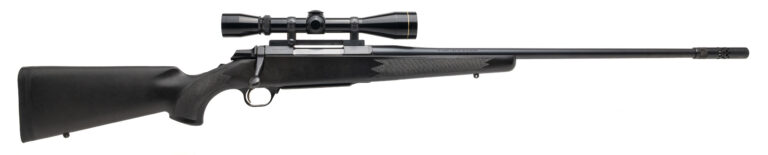
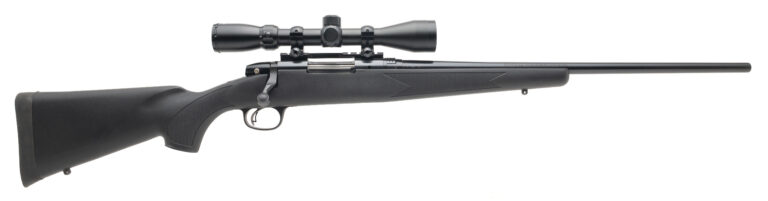
A big-bore revolver or a magnum rifle is bought for a reason: to hunt deer, hogs, elk or bear with a handgun, to hunt large game at distance, or to carry something that will stop a bear. Each of those reasons meets a rule. Handgun hunting is legal in most states but with calibre and barrel minimums that differ; carrying a sidearm in the field is governed by carry law and sometimes by season; and federal land has its own answers. This guide sets out what applies where, and how a big-bore firearm reaches your dealer.
Buying a big-bore firearm
The transfer is the same as for any gun. A revolver or a rifle ships to the licensed dealer you name at checkout, you complete ATF Form 4473 there and pass the background check, and you take it home under your state's rules. A dealer may transfer a handgun to a buyer of 21 or older and a rifle to a buyer of 18 or older, and a handgun must go through a dealer in your own state. Ammunition, holsters, scopes and grips ship to your door where state law allows. None of the states we ship to require a permit to buy a revolver; Florida adds a waiting period, and Pennsylvania, Michigan, Wisconsin, Nebraska and Iowa run their own paperwork alongside the federal check, as the city pages explain.
Handgun hunting
Most states allow deer to be hunted with a handgun during the firearms season, and the common rule is a centerfire cartridge of a minimum calibre, often .357 Magnum or larger, sometimes with a minimum barrel length or a minimum energy figure. Texas, Georgia, Alabama, Mississippi, Louisiana, Arkansas, Oklahoma, Kansas, Nebraska, Montana, Wyoming, Idaho, Utah, Arizona, Nevada and North Dakota all allow handgun deer hunting with rules of that kind. Florida allows handguns for deer with a centerfire cartridge. Some states add a straight-walled requirement or a case-length minimum for handguns as they do for rifles. Always read the current regulations for the state and season before you plan on hunting with a revolver; the rules change and the fines do not.
Elk, bear and hogs
Elk and bear have higher minimums in the states that set them, typically a cartridge that produces a stated energy at a hundred yards, which puts the .44 Magnum and the .454 Casull on the list and rules out the .357. Hogs are unregulated or lightly regulated in the southern states, where a big-bore revolver is the classic close-cover hog gun and no calibre minimum applies on private land. Handgun hunting with a scoped revolver or a single-shot pistol in a rifle cartridge is a mature sport with its own seasons in a few states.
Carrying in the field
Carrying a sidearm while hunting is a separate question from hunting with it. In most of the states here, a person who may lawfully carry a handgun may carry one while hunting during firearms seasons, and many allow it during archery and muzzleloader seasons as long as the handgun is not used to take game. A few states restrict sidearms during archery season or require a carry permit to carry one then. Montana, Wyoming and Idaho, where bears are the reason, allow a handgun during any season. The state's carry law applies on top: permitless in most of our states, permit required in Pennsylvania, Michigan, Wisconsin and Nevada.
Bear country and federal land
National forests follow the carry law of the state they are in, so a handgun lawful in Montana is lawful in the Lolo National Forest. National parks have allowed firearms under state law since 2010 but prohibit discharging them, and their buildings are off limits; a revolver may be carried in Yellowstone and may not be fired there except in genuine self-defence, which the park will investigate. Bear spray is the first line in grizzly country and every agency says so; a revolver is the second, and the states with grizzlies expect you to carry both. Alaska is outside our footprint but its rules are the model: any calibre, any season, carry it always.
Scoped revolvers and single-shot pistols
A revolver with a scope or a red dot is legal for hunting wherever a revolver is, and most states place no limit on handgun optics. Single-shot pistols in rifle cartridges such as the .308 or the 7mm-08 are a separate case: they are handguns under federal law but a few states set barrel-length maximums or exclude bottleneck cartridges from their handgun seasons, and the straight-wall states apply the same case rule to handguns as to rifles. Read the definition of a legal handgun in the state's regulations, not just the calibre line.
Which calibre satisfies which rule
- .357 Magnum: meets most deer minimums; not enough for elk or bear minimums where energy figures apply.
- .41 and .44 Magnum: meet every deer rule and most elk and bear rules; the standard hunting revolvers.
- .454 Casull, .460 and .500 S&W: exceed every minimum; chosen for bear defence and long-range handgun hunting.
- 10mm Auto: meets most deer and hog rules and has become a common bear-country semi-automatic.
- .45-70, .450 Bushmaster, .350 Legend: rifle cartridges that satisfy the straight-wall states and hit hard at short range.
Transport and storage
Federal law protects transporting a firearm through any state if it is unloaded and cased and lawful at both ends, which covers a hunting trip across state lines. In the truck, a loaded revolver is subject to the state's vehicle carry rule; in camp, it is subject to the state's ordinary possession law. A hard case with a lock and the serial number written down at home covers most of what can go wrong.
The calibre guide and the bear-country guide cover the choice of gun; the rifle guide covers the straight-walls and the lever guns. Browse revolvers and big-bore rifles in the catalogue.
General information, not legal advice. Current as of September 2026. Laws change; check the official source before you act.